Sphynx cat
Endearingly hairless, extroverted feline marvel with peach-fuzz warmth, acrobat energy, and dog-like devotion.
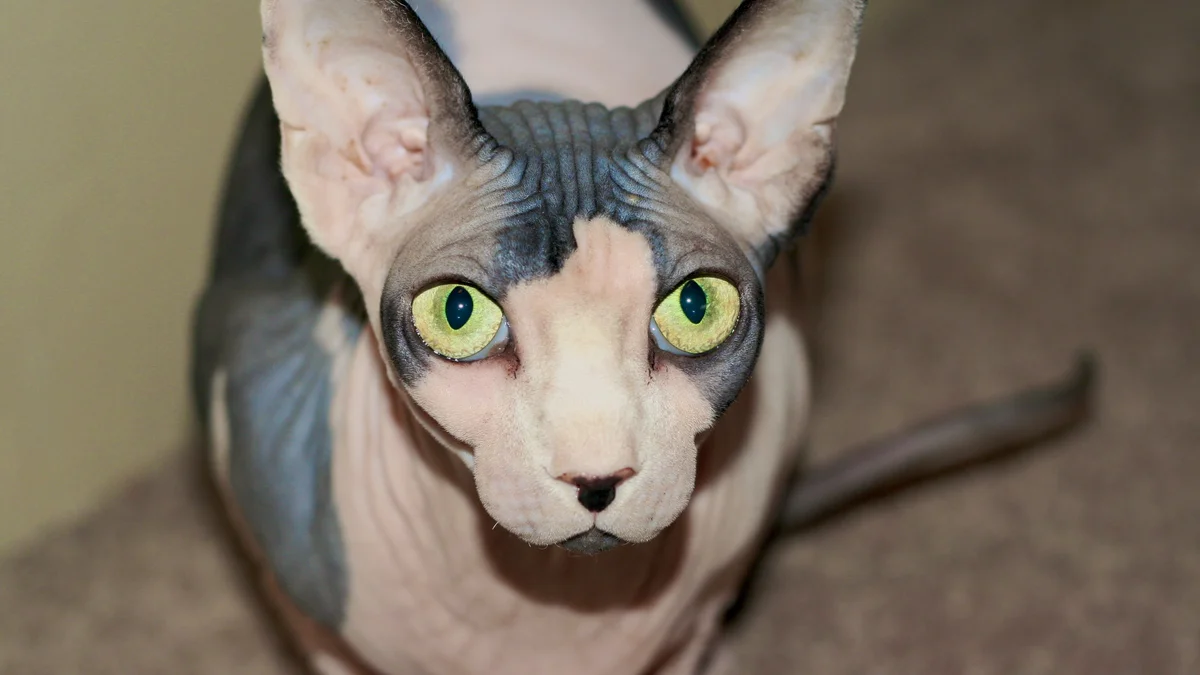
Sphynx cat Fast Clinical Specifications
Adult Weight
Standing Height
Litter Box Size
Average Lifespan
Daily Calories
Coat Care
Sphynx cat Temperament & Behavioral Profile
Outrageously affectionate, curious, and clownish. Known as 'part cat, part dog, part monkey, and part child' due to their hyper-social personality.
Affection with Humans
Loves lap cuddles, sleeping under duvet blankets, and shoulder-perching.
Playfulness & Energy
Acrobatic jumper; plays fetch and explores high shelves.
Friendliness with Other Pets
Extremely social; often cuddles with dogs and other cats for warmth.
Grooming Maintenance
Requires weekly baths, ear cleaning, and nail bed wiping.
Family & Home Compatibility
Wonderful in busy, loving households. They hate being alone and thrive when paired with another pet. Bringing home a kitten? Browse our curated Cat Name Generator for fitting names.
Training & Daily Management
Easily clicker-trained using meat treats; can learn to sit, fetch, and walk on a feline chest harness. Calibrate life-stage discipline and cognitive aging using the AAFP Cat Age Calculator.
Sphynx cat Colors, Patterns & Coat Types
Pigment patterns are displayed directly on the skin leather, mirroring fur genetics (points, tabbies, solids). Coat texture: Apparent hairlessness; fine downy fuzz with characteristic wrinkled skin on forehead and shoulders.
Solid Black / Blue
Dark slate-grey to jet-black skin pigment.
Pink / White
Pale peach-toned skin leather.
Tortoiseshell / Calico
Mottled black, cream, and red skin patches.
Clinical Genetics & Coat Health Notice
Sun exposure causes severe sunburn and solar dermatosis; strictly indoor living with UV window film recommended.
Sphynx cat Kitten Development Timeline
Consistent nutritional checkpoints ensure proper skeletal and muscle growth.
8 Weeks Checkpoint
Acclimate kitten gently to warm baths, nail wiping, and ear cleaning.
16 Weeks Checkpoint
High caloric intake required; provide warm heated bed zones.
6 Months Checkpoint
Baseline echocardiogram screen for HCM; monitor skin oil levels.
Adult Benchmark
Muscular pot-bellied 'barrel' appearance is normal and healthy for the breed.
The Normal 'Pot Belly'
The Sphynx standard specifies a full, rounded abdomen as if having just eaten a large meal; this is normal anatomical breed conformation, not obesity.
Interactive Veterinary Calculators for Sphynx cats
Run customized formulas calibrated specifically for Sphynx cat biological benchmarks, weight curves, and life stages.
Sphynx Human Age Calculator
Calculate exact biological human age with AVMA cat life-stage scaling.
Sphynx Ergonomic Sizing Matcher
Determine exact dimensions to promote healthy posture and comfortable den rest.
Sphynx Weight & Calorie Predictor
Estimate adult weight curve and WSAVA daily caloric baseline for optimal body condition.
Emergency Toxicity Triage
Calculate immediate dosage triage if hazardous household toxins or plants are ingested.
Hereditary Health & Clinical Watchlist
Hypertrophic Cardiomyopathy (HCM)
Thickening of the left ventricular heart muscle; the leading genetic cause of feline cardiac death.
Annual echocardiogram screening by board-certified veterinary cardiologist before breeding.
Urticaria Pigmentosa
Mast cell infiltration creating crusty, hyperpigmented macules on the skin.
Topical veterinary steroid creams and oral antihistamines.
Sebum Accumulation & Malassezia Yeast
Absence of hair allows body oils to pool in skin folds and nail beds.
Weekly warm-water baths with gentle chlorhexidine/ketoconazole veterinary shampoo.
Portion Control & Nutrition Notes
Sphynx cats have a significantly higher basal metabolic rate than furred cats because they lose body heat continuously. Feed high-protein, calorie-dense feline diets. To balance canned moisture against dry food calories, launch the WSAVA Wet & Dry Calorie Splitter.
Fascinating & Verified Sphynx cat Facts
Surprising anatomical, historical, and behavioral traits confirmed by veterinary researchers and breed historians.
Feels Like a Warm Peach
Petting a Sphynx feels like handling a warm chamois leather cloth or a hot, ripe peach.
KRT71 Keratin Gene
Their hairlessness is caused by a naturally occurring recessive mutation in the keratin 71 gene that disrupts the hair shaft root structure.
Earwax Buildup
Without ear hairs to filter dust, Sphynx cats produce dark brown earwax that requires weekly gentle cleaning.
Sphynx cat Origin & Historical Evolution
Bred in Toronto, Canada in 1966 when a domestic cat named Elizabeth gave birth to a hairless male kitten named Prune, identified as a spontaneous recessive mutation in the KRT71 keratin gene.
Prune the Pioneer
A black-and-white domestic cat in Toronto produced 'Prune', the first recorded modern hairless kitten.
Wadena, Minnesota Foundation
Farm cat 'Jezabelle' birthed hairless kittens 'Epidermis' and 'Dermis', establishing the American bloodline.
CFA Championship Status
The Cat Fanciers' Association officially accepted the Sphynx for championship competition.