French Bulldog
Compact, affectionate companion with bat ears, gentle indoor temperament, and low-exercise requirements.
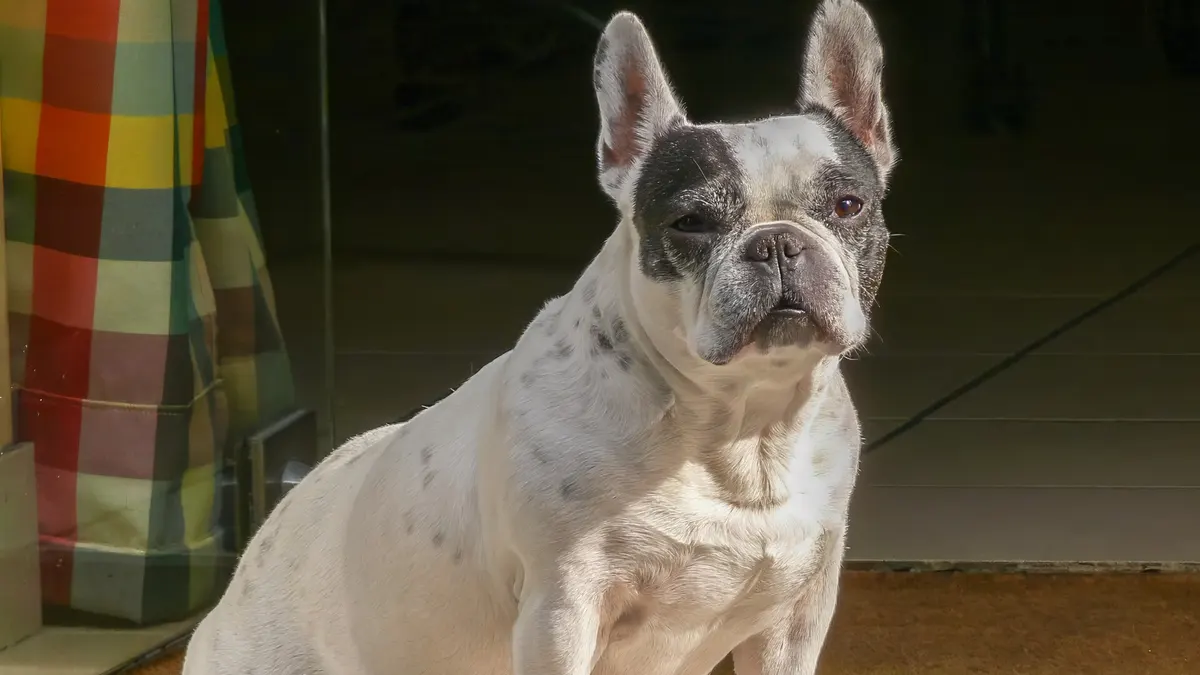
French Bulldog Fast Clinical Specifications
Adult Weight
Standing Height
Ideal Crate Size
Average Lifespan
Daily Calories
Activity Level
French Bulldog Temperament & Behavioral Profile
French Bulldogs are celebrated for their affectionate, calm, and charismatic temperament. Known as 'clowns in philosopher cloaks,' they are patient indoor companions that form intense bonds with their human family.
Affection with Family
Extremely loving, thrives on human contact and lap cuddles.
Good with Young Kids
Gentle and sturdy; tolerates supervised toddler play with patience.
Sociability with Dogs & Cats
Generally friendly with household pets when socialized early.
Barking & Vocalization Tendency
Very quiet; rarely barks, instead communicating through snorts, yodels, and chortles.
Energy & Daily Exercise
Low energy; satisfied with two short 15-to-20 minute daily strolls in mild weather.
Alone-Time Tolerance
Prone to separation anxiety; requires human presence or dedicated companionship.
Family & Home Compatibility
Ideal for apartments, busy suburban homes, and seniors. Their low bark drive makes them neighbor-friendly, while their robust build withstands enthusiastic family life. Welcoming a new puppy? Explore our curated Dog Name Generator for inspiration.
Training & Daily Management
Frenchies respond best to positive reinforcement and high-value treats. Harsh discipline causes them to shut down. Keep training sessions brief (5–10 minutes) to match their attention span. Calibrate life-stage discipline and cognitive aging using the AVMA Dog Age Calculator.
French Bulldog Colors, Patterns & Coat Types
French Bulldog coat colors range from traditional AKC-accepted shades to highly sought-after rare and dilute varieties like Fluffy, Blue, Merle, and Lilac. Coat texture: Short, smooth, close-lying single coat (except in Fluffy varieties carrying two copies of the recessive FGF5 long-hair gene).
Standard Fawn & Fawn Brindle
Classic warm tan to reddish fawn coat with characteristic black mask and subtle dark striping.
White & Brindle (Pied)
Clean white base with clearly defined brindle patches across head, ears, and back.
Fluffy (Long-Haired French Bulldog)
Distinctive wavy, plush long coat on ears, collar, and chest caused by the recessive autosomal FGF5 gene.
Blue & Blue Fawn French Bulldog
Silvery slate-gray hue created by dilute gene (d/d) that alters black pigmentation.
Lilac & Isabella French Bulldog
Ultra-rare pale champagne-silver coat produced by combining homozygous chocolate (b/b) with blue dilution (d/d).
Merle French Bulldog
Mottled patches of dark pigment overlaid on a lighter base, often paired with piercing blue or heterochromatic eyes.
Solid Black French Bulldog
Solid jet black coat without any brindle trace. Disqualified in AKC show standards but a popular pet companion.
Clinical Genetics & Coat Health Notice
Dilute coat shades (Blue, Lilac) carry higher susceptibility to follicular dysplasia or dry skin. Always prioritize respiratory and spinal genetics above rare color pigments.
French Bulldog Puppy Development Timeline
French Bulldog puppy growth proceeds rapidly in bone density before slowing between 9 and 12 months, followed by muscular chest widening up to month 18.
8 to 12 Weeks (Weaning & Socialization)
Begin crate training with 24" divider. Administer primary core DHPP vaccinations; avoid public dog parks.
4 to 6 Months (Teething & Skeletal Growth)
Adult incisors emerge. Transition to puppy harness to prevent tracheal strain. Feed 3 WSAVA-balanced meals daily.
7 to 12 Months (Adolescence & Adult Weight)
Spay/neuter consultation window. Transition to adult formulation at 10–12 months to prevent premature weight gain.
12 to 18 Months (Chest Widening & Muscle Maturity)
Skeletal plates close. Monitor body condition score (BCS) strictly to keep ribs easily palpable.
The Truth About 'Mini' or 'Teacup' French Bulldogs
The American Kennel Club recognizes only one standard size for French Bulldogs. Labels such as 'Mini Frenchie', 'Micro', or 'Teacup' are unregulated marketing descriptions. These dogs are either runts bred for dwarfism or crossbred with small breeds (e.g. Chihuahua), carrying elevated risks for organ hypoplasia and hydrocephalus.
Interactive Veterinary Calculators for French Bulldogs
Run customized formulas calibrated specifically for French Bulldog biological benchmarks, weight curves, and life stages.
Frenchie Human Age Calculator
Calculate exact biological human age with AVMA small-breed scaling (Year 1 = 15, Year 2 = 24, +4 yrs/yr thereafter).
Frenchie Crate Size Matcher
Determine exact ergonomic crate dimensions to prevent claustrophobia while promoting secure den instincts.
Frenchie Puppy Adult Size Predictor
Estimate adult weight curve from 8-week to 16-week growth checkpoints based on pediatric canine data.
Emergency Chocolate Toxicity Triage
Calculate immediate theobromine mg/kg dosage triage if chocolate or cocoa is accidentally ingested.
Hereditary Health & Clinical Watchlist
BOAS (Brachycephalic Airway Syndrome)
Stenotic nares (pinched nostrils) and elongated soft palate impede airflow during panting.
Strictly avoid heat above 75°F (24°C). Use a chest harness instead of neck collar to reduce tracheal pressure.
IVDD (Intervertebral Disc Disease)
Chondrodystrophic spinal genetics make spinal discs prone to calcification and premature herniation.
Prevent jumps from beds or couches with pet ramps. Maintain lean body weight to limit spinal vertebrae load.
Skin Fold Pyoderma
Facial wrinkles and tail pockets trap moisture and skin secretions, encouraging yeast and bacterial growth.
Clean facial folds 2 to 3 times weekly with veterinary chlorhexidine wipes and dry thoroughly.
Portion Control & Nutrition Notes
French Bulldogs are prone to rapid obesity because of their low basal activity and compact muscular frame. Weigh kibble or wet portions on a gram scale rather than relying on standard measuring cups, which introduce up to 25% caloric error. To calculate safe treat limits and avoid toxic snacks, use the Emergency Chocolate Toxicity Triage Tool.
Fascinating & Verified French Bulldog Facts
Surprising anatomical, historical, and behavioral traits confirmed by veterinary researchers and breed historians.
Anatomical Non-Swimmers
Due to their heavy, dense muscle frame, short snout, and disproportionate center of gravity, French Bulldogs sink quickly and cannot swim without an approved canine life jacket.
Over 80% Delivered via C-Section
Because French Bulldog puppies have disproportionately broad heads and mothers have compact pelvic canals, the vast majority of births require planned veterinary Caesarean deliveries.
The Bat Ear Controversy
British breeders originally favored folded 'rose ears' similar to English Bulldogs. Wealthy American tourists fell in love with upright 'bat ears' and organized the first club exclusively dedicated to preserving them.
A Frenchie Survived on the Titanic
A champion show Frenchie named Gamin de Pycombe was on board the RMS Titanic in 1912, insured by owner Robert Daniels for a then-record sum of $750 (equivalent to ~$24,000 today).
French Bulldog Origin & Historical Evolution
The French Bulldog originated in the mid-1800s during England's Industrial Revolution, when lace workers in Nottingham bred toy bulldogs to serve as affectionate lap warmers. When technological mechanization pushed craftsmen to Normandy and Paris, they brought their miniature bulldogs with them, where Parisian cafe culture popularized their signature erect 'bat ears'.
Nottingham Lacemakers' Lap Warmers
English lace workers miniaturized the standard bulldog to 16–20 lbs to sit on workbenches and keep artisans warm in drafty textile mills.
Parisian High Society & 'Bat Ear' Revolution
Exported to France, the dogs became high-society mascots among artists, writers, and aristocrats, who selectively bred for erect bat ears over traditional rose ears.
First Breed Standard & AKC Recognition
American fanciers founded the French Bull Dog Club of America (FBDCA) in New York, codifying the upright bat ear as an uncompromising breed hallmark.
#1 Most Popular Dog in America
Officially surpassed the Labrador Retriever as the most registered dog breed in the United States after a historic 31-year reign.